Sloan Scholars

Author: John Zhu

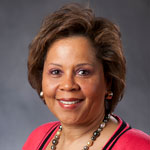
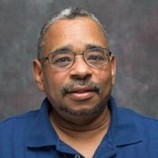
Tyler Johnson

Sloan Scholar Tyler Johnson Earns MTV Fellowship

Sloan Scholar Tyler Johnson, a Duke Ph.D. student in physics, has been named a Doctoral Fellow in Applied Antineutrino Physics by the Consortium for Monitoring, Technology, and Verification (MTV) at the University of Michigan.

Johnson and Awe

Tyler Johnson (left) and Connor Awe

Johnson, who is pursuing his Ph.D. under the guidance of Professor Phillip Barbeau, is investigating kinematic reconstruction of the originating direction of the neutrino using inverse beta decay products. For his graduate research, he is developing a small-scale time projection chamber neutrino detector capable of extracting neutrino directionality by reconstructing inverse beta decay products with machine learning.

Another Duke Ph.D. student in Barbeau’s lab, Connor Awe, also received the fellowship. He is studying ways to perform neutrino directional reconstruction as a means of backgrounds rejection.

The MTV supports emerging research in the area of antineutrino physics applied to nuclear nonproliferation. The fellowship covers full tuition and fees and provides a $33,000 annual stipend for up to five years. The fellowship also includes travel support to the MTV’s annual meetings.

Escape room

Building A Support Network for Underrepresented Scholars

By Caroline Amoroso
2018-2019 Graduate School Administrative Intern for the Duke UCEM
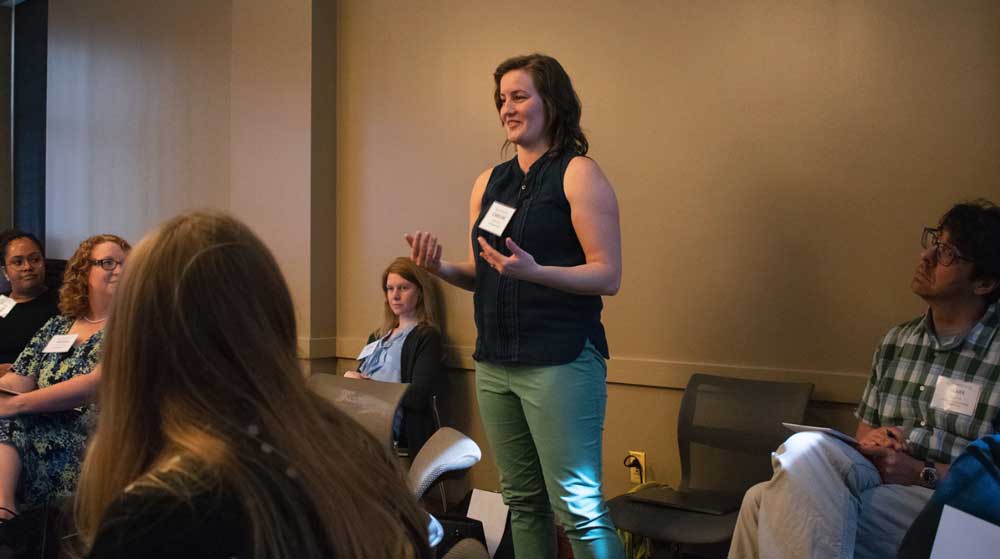
Caroline Amoroso

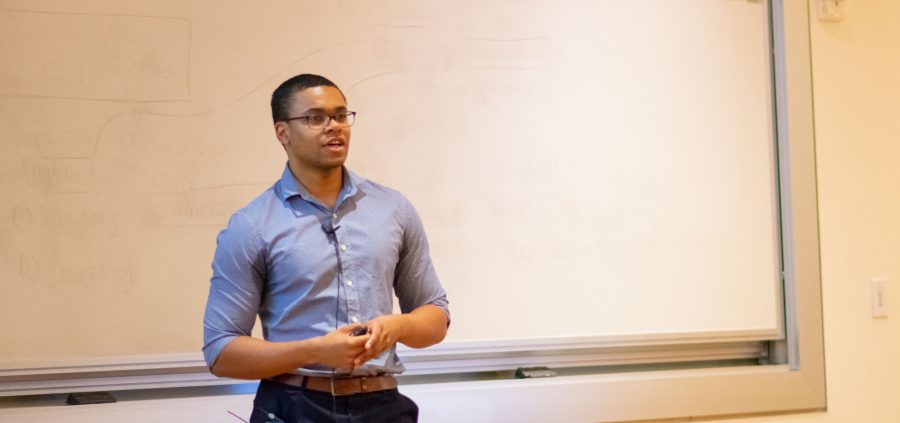
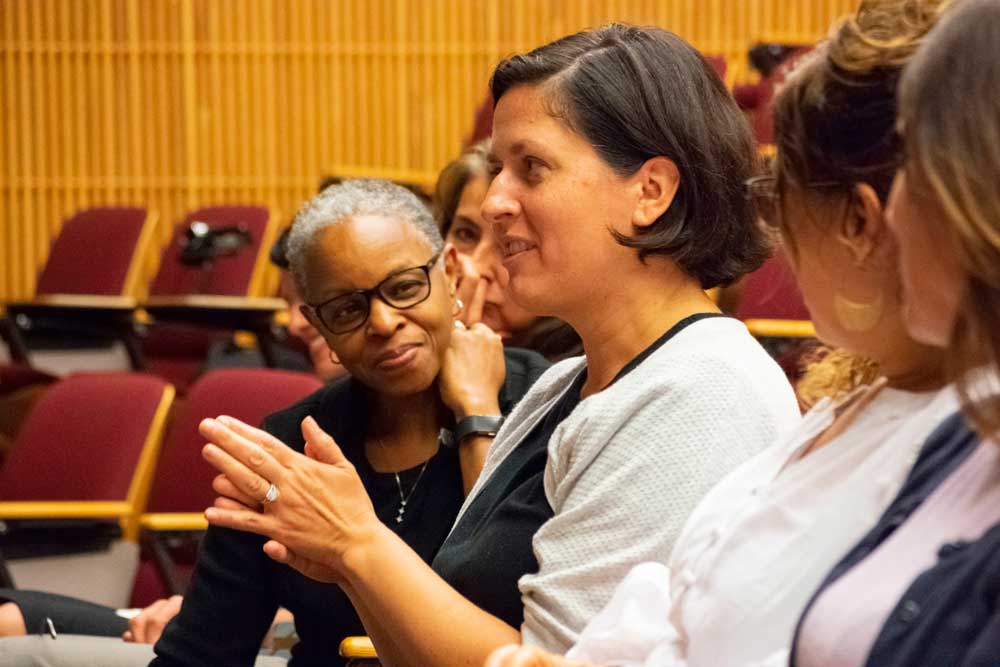
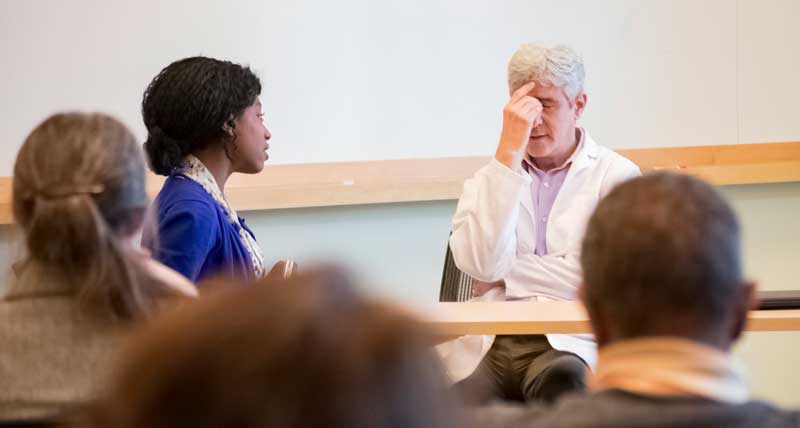
Caroline Amoroso speaks during a discussion about recruitment at the spring meeting of faculty members affiliated with the Duke UCEM.

Over the past year, I served as the graduate student administrative intern for the University Center of Exemplary Mentoring (UCEM) at Duke, a new initiative funded by the Alfred P. Sloan Foundation and led by The Graduate School. Each year, this program provides support and supplemental funding to approximately 10 new Ph.D. students (Sloan Scholars) from underrepresented racial and ethnic backgrounds in the physical sciences and engineering. In my role as administrative intern, my responsibility was to serve as a peer mentor to the Sloan Scholars, to check in with them regularly, to foster community among the Scholars, and to provide a student perspective in the oversight of the program in its first year.

During my early time as a graduate student at Duke, I was very involved with Women in Science and Engineering (WiSE), a student group that connects women graduate students from across science and engineering fields and hosts events where they can share experiences, resources, and ideas for change. Through this student organization, I found a community of like-minded women with whom I could air grievances, seek advice, and find support.

Perhaps most importantly, WiSE helped me find a sense of belonging, a feeling that helped me combat the isolation and imposter syndrome that commonly afflict graduate students, especially underrepresented students. When I became president of WiSE, I advocated to be part of conversations with several of the deans and associate deans in The Graduate School. Those interactions and the reward I felt for my work with WiSE made me curious about a career in administration and how an administrative position might offer a unique opportunity to influence campus culture and affect change.

Given that interest, when I decided to seek funding for a sixth year, the Sloan administrative intern position caught my eye. I was especially motivated by the opportunity to translate my experiences in WiSE into a more formalized program that would benefit students in academic departments where achieving racial and ethnic diversity has been a particular challenge—in the physical sciences and engineering.

Peer, Mentor, Friend

The Duke UCEM aimed to provide individualized support to students and build a community based on shared experience, with the ultimate goal to fix the “leaky pipeline” for underrepresented students in graduate education. The position offered an opportunity to make an impact on the culture and norms in the academic departments where it was needed the most.

Immediately after being offered the position, I was welcomed onto the Oversight Committee, which planned and carried out most of the daily functions of the Duke UCEM. I enjoyed helping to plan events and providing a student perspective on important conversations among the group. In those meetings, I witnessed how administrators workshopped ideas and collaborated to put concepts into concrete action steps.

By far the most fun and rewarding part of my role was getting to know the Sloan Scholars. I watched as they established social networks, found their footing in their departments, and began to discover who they would be in graduate school. My role was to be a resource to the Scholars, including helping them learn their way around campus with a scavenger hunt. I got to know the Scholars individually through group and individual meetings, where they updated me on their progress in the semester.

I also served in a less formal capacity, as the Scholars’ peer and friend. I helped to plan social events such as an escape-room event and a group viewing and discussion of the movie BlacKkKlansman, which fostered community. I gave students advice and listened to their reflections on their first year of graduate school.
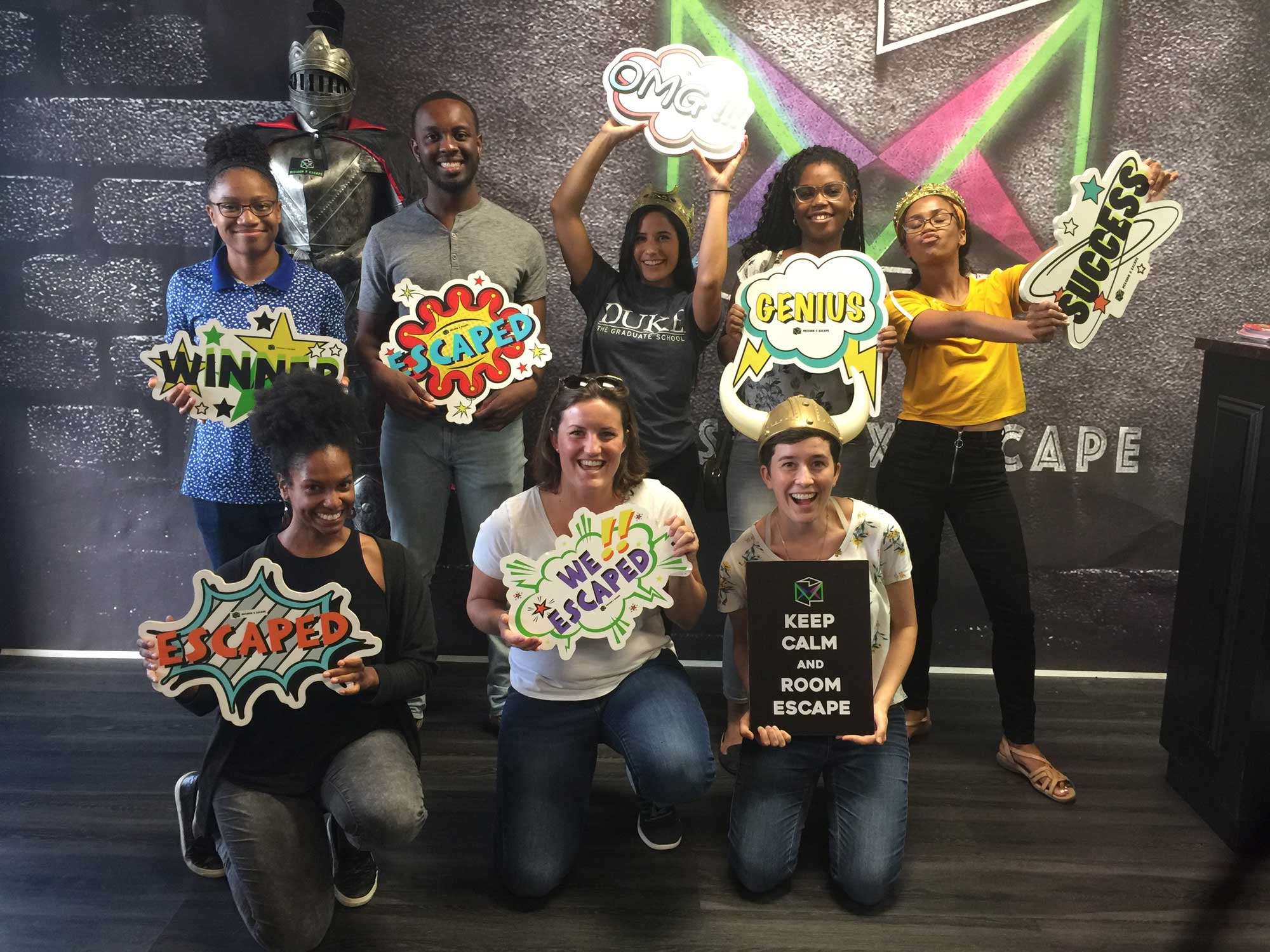
Escape room

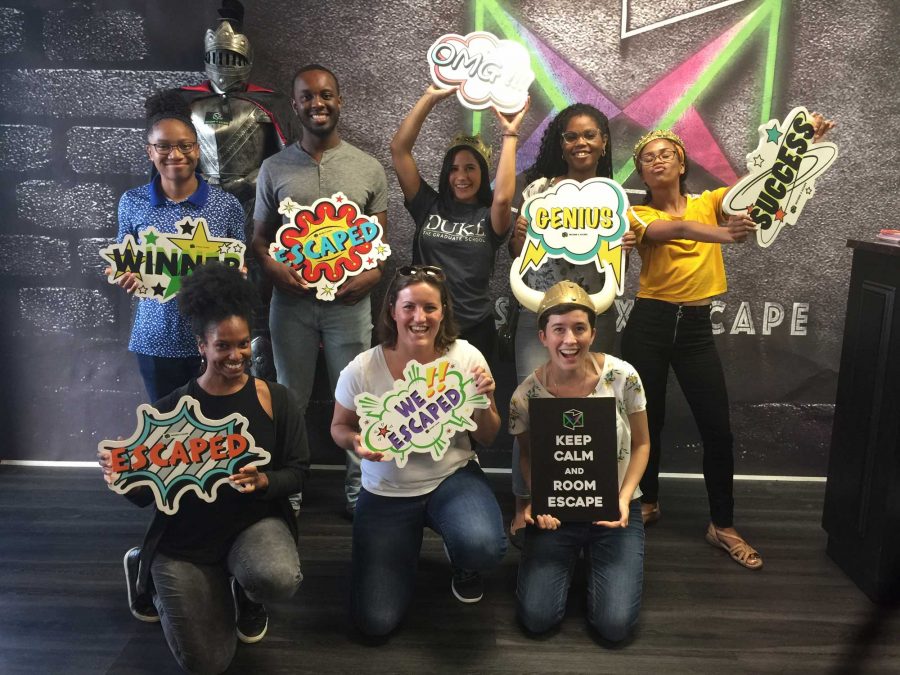
An escape-room outing was one of the activities that Caroline Amoroso (front row, center) organized for the first cohort of Sloan Scholars.

Making It OK to Ask for Help

In general, I found that the Sloan Scholars experienced the classic challenges that most students undergo in their first year. I had heard many similar stories from my peers in WiSE and in my department, but I was surprised and impressed that the Scholars knew how to ask for help so early in their careers. They knew where to find the resources that they needed. They were not afraid to approach their advisers or other faculty with questions or problems that they were experiencing. In their regular check-ins with administrators and with me, they voiced the same concerns, challenges, and feedback, indicating that they were being very transparent in their self-assessments and communicating their true feelings.

Having witnessed many students navigate the first year of graduate school, I recognized that the Sloan Scholars were exceptional in this regard. Too often, students are too self-conscious or insecure to admit when they need help—or don’t realize the resources available to them—until the problem has gotten so big that it has become debilitating or insurmountable. By providing a network of support that included peers, faculty, and administrators, the Duke UCEM created an environment where the Scholars were not afraid to seek help or admit they were struggling, which made it possible to better support them and find solutions to small problems before they became big ones.

Reflecting on this experience, I recognize how successful this first year of the program has been in several respects. First, the Sloan Scholars started graduate school with a built-in community of peers for support. This community has been nurtured by the resources of the Sloan program, but has also taken on its own life, with Sloan Scholars independently perpetuating the relationships with each other throughout their first year.

In addition to their peers, the Scholars also started graduate school with a built-in support network of faculty, administrators, and staff—the kind of support system that many students have to cultivate over years in graduate school. They have people to talk to at every level of the university if challenges arise (and in graduate school, they almost certainly will). This support system will help students recognize and combat many of the common obstacles, like imposter syndrome, feelings of isolation, and the intellectual challenges of becoming independent researchers.

The Importance of Individual Efforts

Personally, this experience gave me an opportunity to apply skills that I developed early in my graduate career in the leadership of WiSE in a setting where those skills could directly contribute to an important university initiative. Before this position, I figured that the hundreds of hours I spent on student group activities would pay dividends in terms of personal fulfillment and perhaps indirectly by helping me through graduate school. But my internship showed me that there are important roles in the administration where I can use my past experiences, like developing solutions to challenges faced by graduate students, considering how department and campus cultures evolve, and advocating for my fellow students. This position has made me seriously consider an eventual role in university administration as a future career step.

More broadly, this internship has also taught me about the necessary role that other members of the university community—including faculty, postdocs, and other staff—play in changing the culture around diversity in higher education. For underrepresented students entering Ph.D. programs who aren’t lucky enough to have a built-in support network like the one the Duke UCEM provides, the burden falls on them to create these networks on their own—something that is much harder to do for students who may already feel isolated and singled out in a department of people who don’t look like them. Through this position, I realized how much the efforts of individual faculty and staff members can contribute to recruiting, retaining, and supporting underrepresented students getting Ph.D.s.

As I move forward into an academic career and go on to mentor undergraduate and graduate students, I will keep in mind the tools that I have learned through my work for the Duke UCEM. I plan to apply this understanding and my central values around diversity to change patterns of representation in my field from the inside.


Caroline Amoroso (Ph.D.’19 Evolutionary Anthropology) served as the Graduate School Administrative Intern for the University Center of Exemplary Mentoring at Duke during the 2018-2019 academic year. She received her Ph.D. in May and will be starting a postdoctoral position in the Biology Department at the University of Virginia.

2018 Boot Camp

Duke UCEM Fall 2018 Updates

Here’s a look at some of the activities and programs organized by the Duke University Center of Exemplary Mentoring in fall 2018:

Escape roomRecord escape: What happens when you lock a group of brilliant young scientists in a room? They get out in record time! Sloan Administrative Intern Caroline Amoroso organized a team-building outing for our first cohort of Sloan Scholars at an escape room in August. The Scholars made quick work of the challenge. “The staff said they had never had a group get out so fast without needing hints,” Amoroso said.

Movie and discussion: The UCEM organized a viewing of the movie “BlacKkKlansman” for Sloan Scholars in September and followed that up with a lunch discussion about race and space in January. Members of the Counseling and Psychological Services team facilitated the lunch conversation as part of the UCEM’s holistic approach to addressing aspects of student wellbeing.

Mentoring MatinéeMentoring Matinée: On September 27, the UCEM, the Pratt School of Engineering, and the Duke Graduate School cosponsored Mentoring Matinée, an interactive-theater workshop exploring common pitfalls and issues in STEM Ph.D. student mentoring. There were two sessions, one for faculty and the other for students | More about Mentoring Matinée

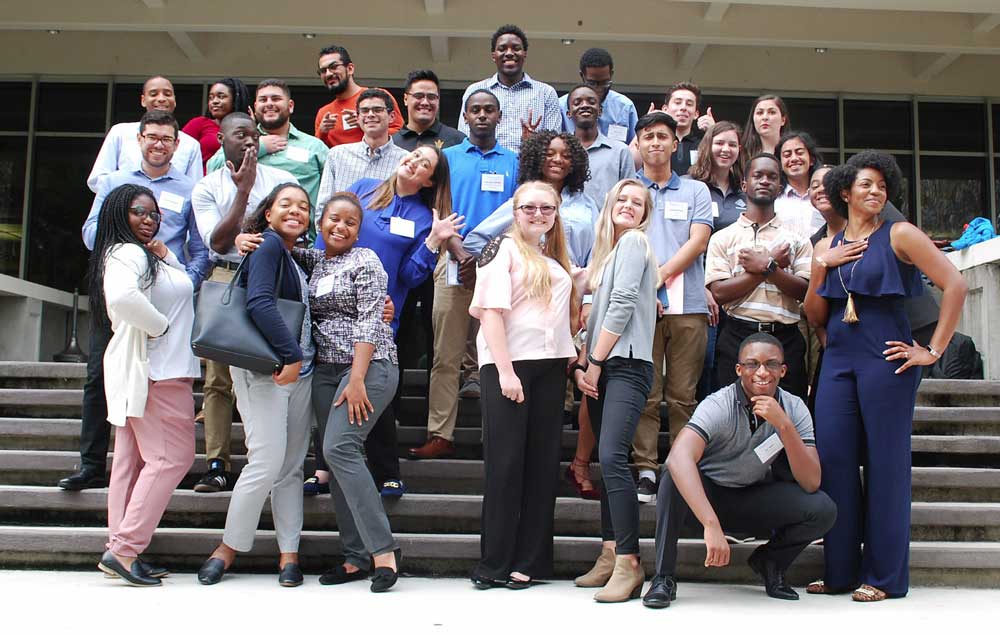
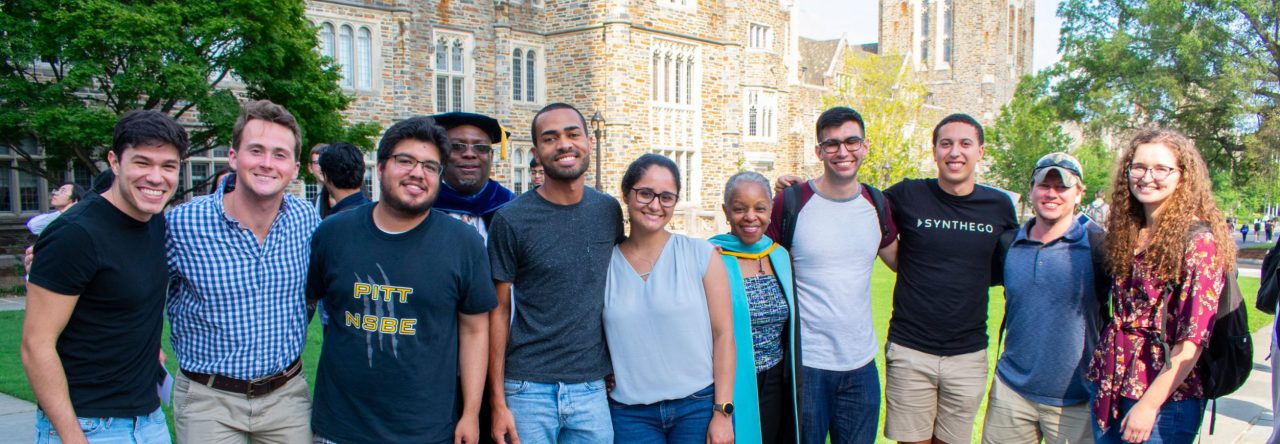
2018 Boot CampUndergraduate Boot Camp: The UCEM held its first Duke-Sloan Boot Camp, which brought talented undergraduates in the physical sciences to Duke for a two-day program that helped them think critically about their research interests and skills, learn practical strategies for the graduate admissions process, and meet students and faculty in the Duke UCEM’s partner departments.

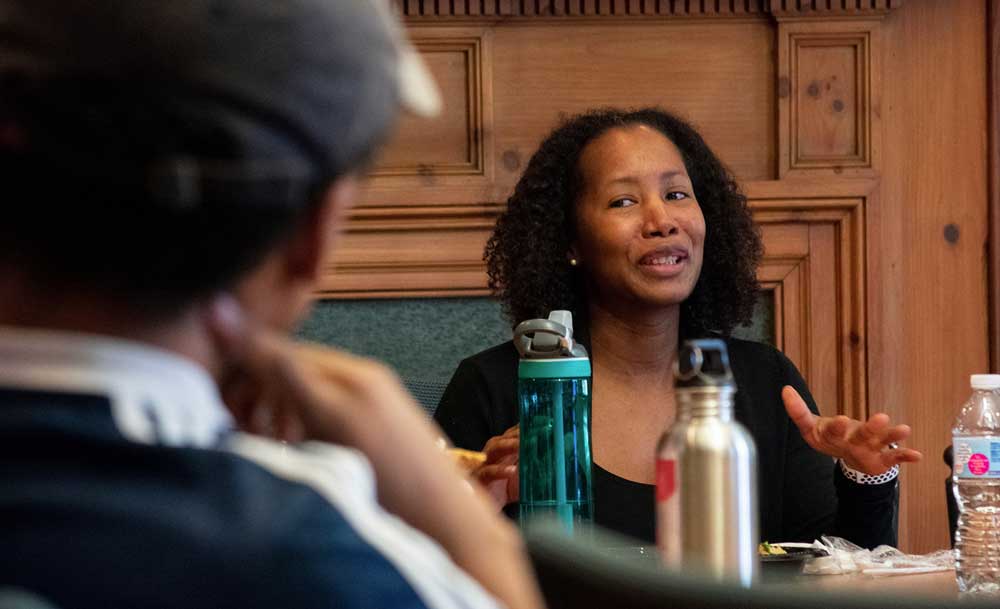
Audrey BowdenLunch with Graduate School alumna: Ph.D. alumna Audrey Bowden, an associate professor of biomedical engineering at Vanderbilt University, visited The Graduate School in November and had lunch with the Sloan Scholars, sharing her professional journey and experiences.

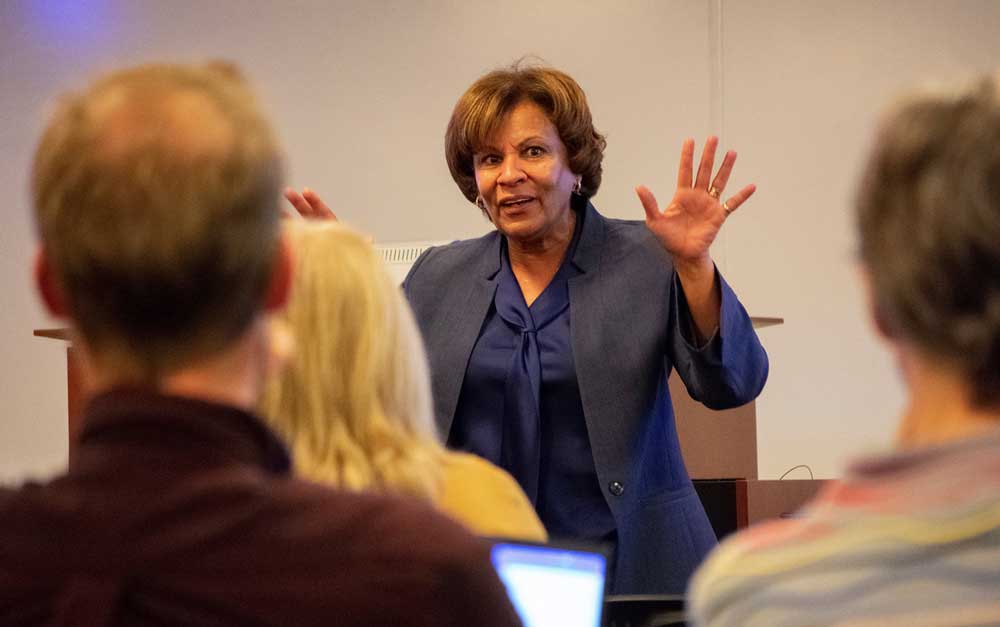
Cynthia SpenceTalking HBCU: Cynthia Spence, director of the United Negro College Fund/Mellon Programs, came to Duke in November to meet with Sloan Scholars and to hold two faculty conversations. The faculty discussions focused on recruiting undergraduate students from historically black colleges and universities for graduate study. The discussions touched on myths and facts about HBCU students, as well as strategies to engage and recruit them. Those insights—along with a holistic admissions rubric developed by the Duke UCEM—were later shared with Duke department chairs through a panel conversation hosted by the Office of Faculty Advancement. | More about Spence’s visit

Johnna Frierson, PhD

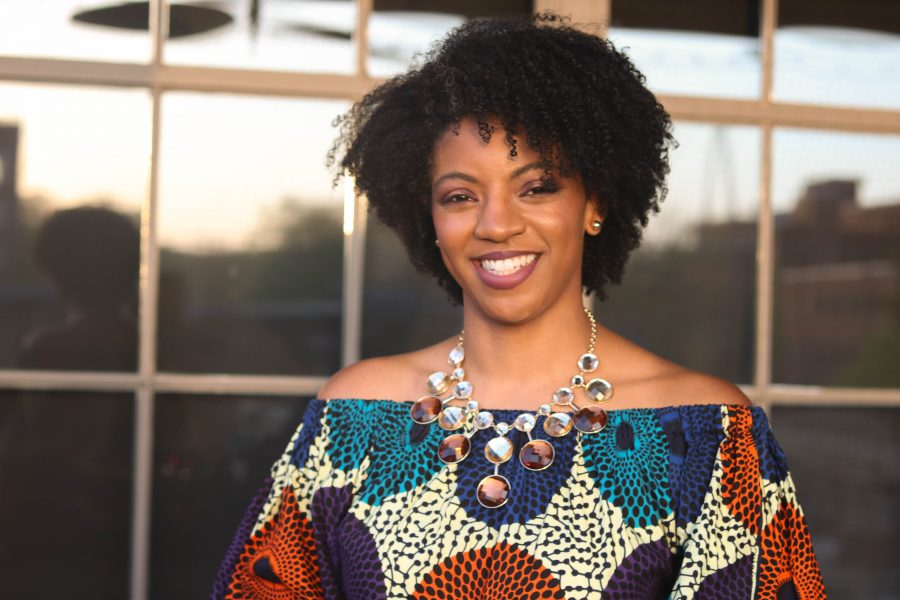
UCEM Collaborator Johnna Frierson Named NRMN Mentor of the Month

Johnna Frierson, Ph.D., a member of the advisory committee for the Duke University Center of Exemplary Mentoring, has been recognized as Mentor of the Month by the National Research Mentoring Network, which works to provide researchers at all career stages in the biomedical, behavioral, clinical, and social sciences with evidence-based mentorship and professional development programming that emphasizes the benefits and challenges of diversity, inclusivity, and culture. Frierson is director of diversity and inclusion at the Duke Pratt School of Engineering.

Read her Q&A with the NRMN

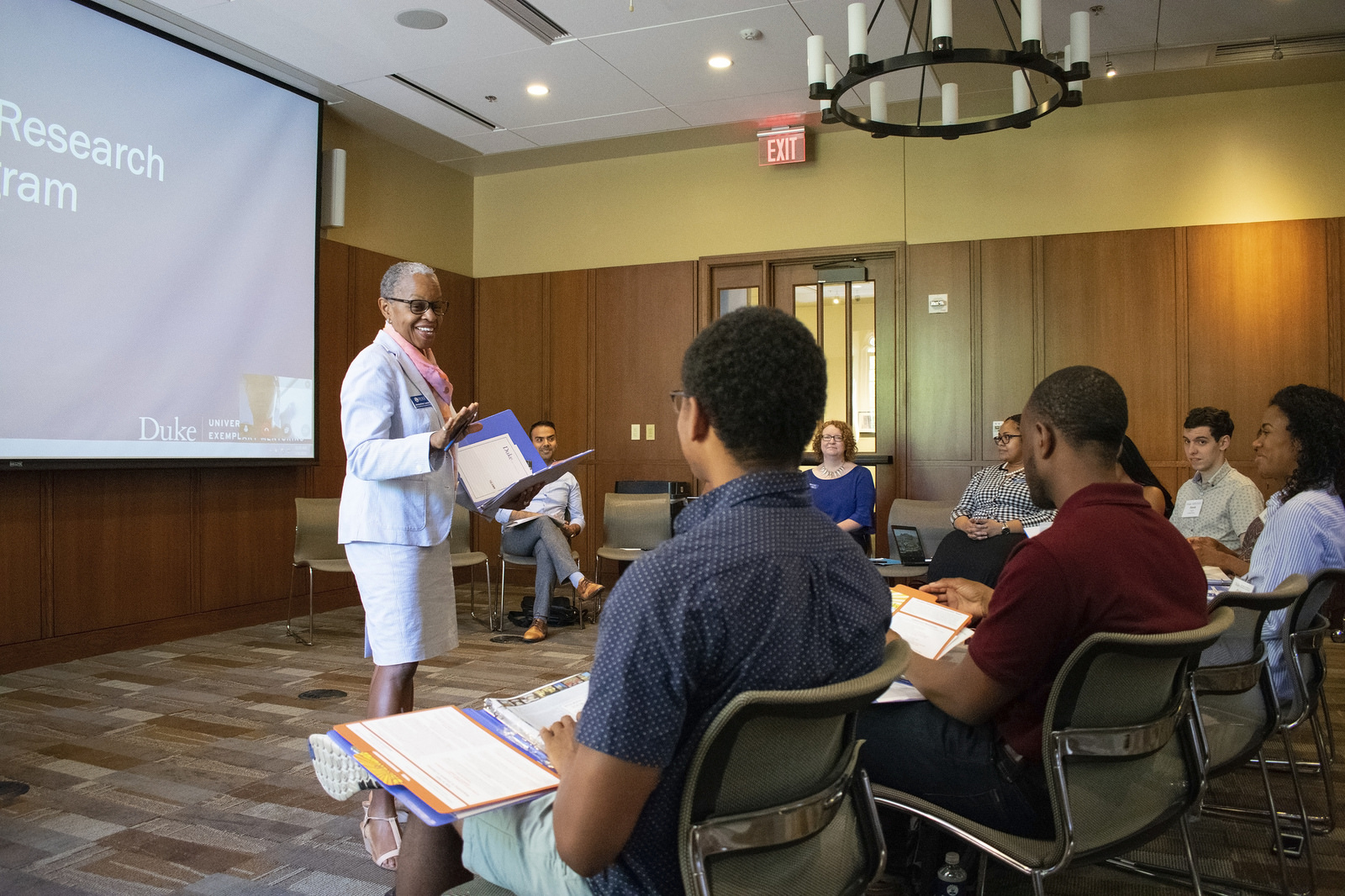
Cynthia Spence spoke to Duke faculty on November 1, 2018.

Director of UNCF/Mellon Programs speaks at Duke about recruiting students from HBCUs

Cynthia Spence spoke to Duke faculty on November 1, 2018.

Cynthia Spence spoke to Duke faculty on November 1, 2018, tackling myths about HBCUs and their students, which she said hamper efforts to recruit students from more diverse backgrounds into Ph.D. programs at predominantly white institutions.

The Duke University Center of Exemplary Mentoring and the Duke Graduate School hosted two faculty conversations on November 1 with Cynthia Spence, director of the United Negro College Fund/Mellon Programs.

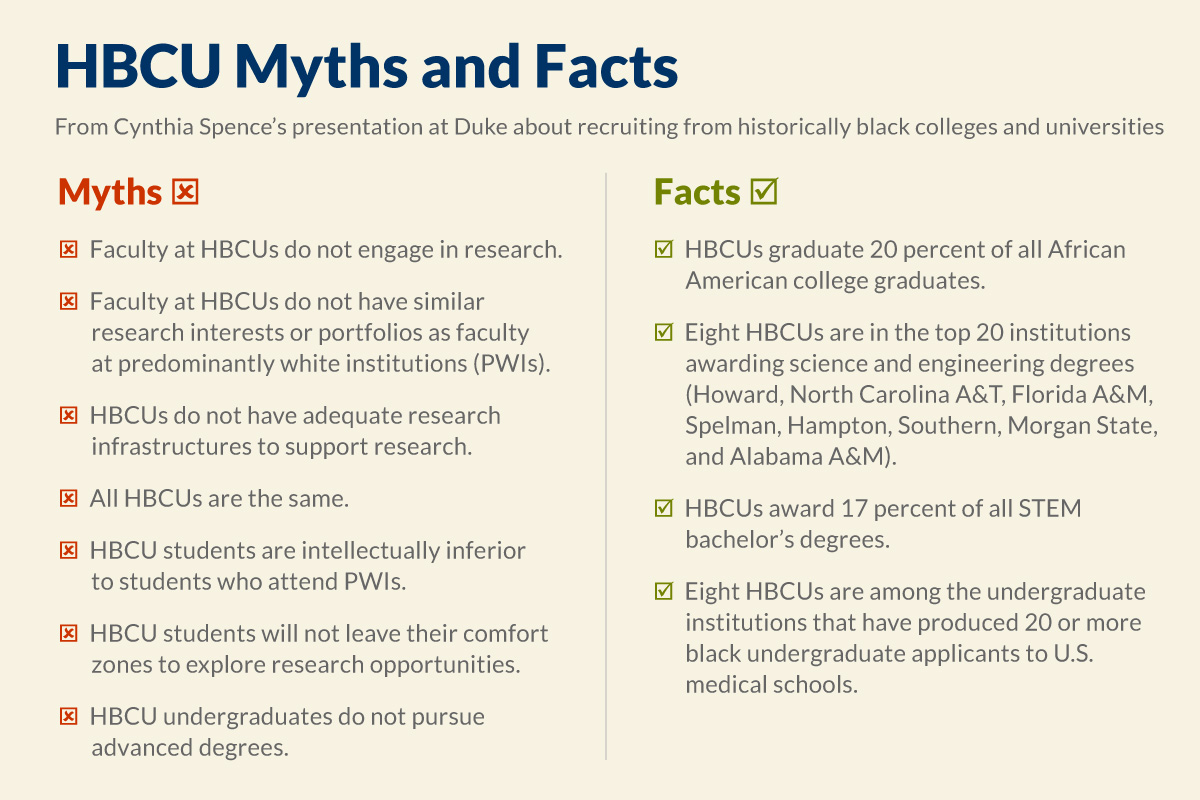
Spence, an associate professor of sociology at Spelman College, met with faculty in STEM as well as the humanities and social sciences. She discussed strategies for more effective outreach to and recruitment of undergraduates from historically black colleges and universities for graduate programs at elite, predominantly white institutions like Duke. Spence also tackled a number of myths about HBCUs that tend to hamper such efforts (see graphic below).

Visit The Graduate School website for a recap of Spence’s talk.

HBCU myths and facts

Mentoring Matinée

Mentoring Matinée tackles common issues in STEM graduate student advising

The Duke University Center of Exemplary Mentoring, the Pratt School of Engineering, and the Duke Graduate School cosponsored Mentoring Matinée, an interactive-theater workshop, on September 27 to explore common pitfalls and issues in STEM Ph.D. student mentoring.

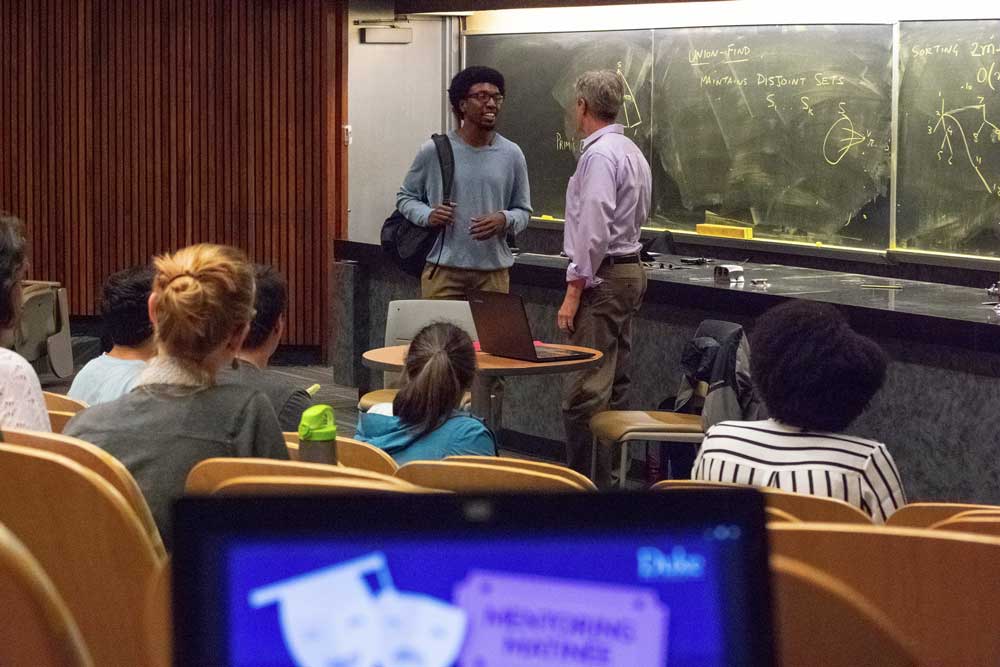
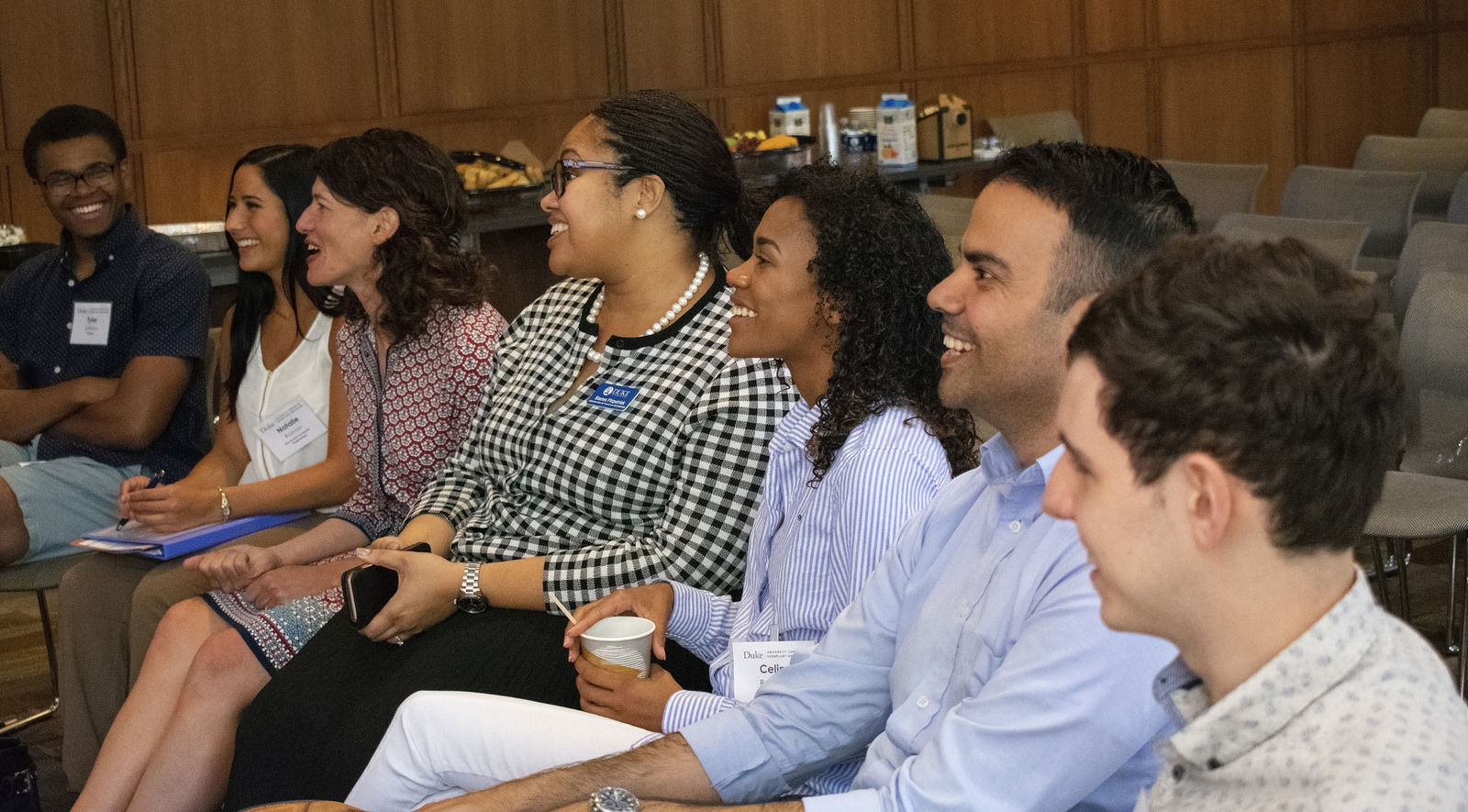
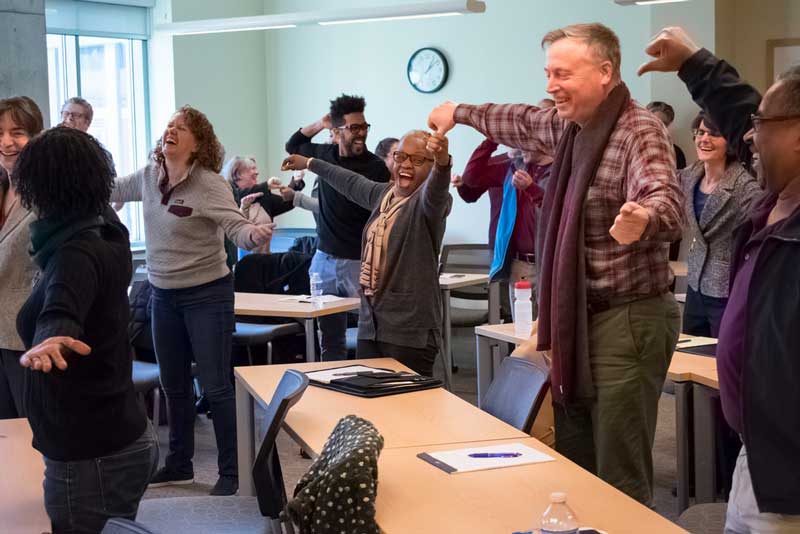
Duke faculty discuss a skit they just watched during the workshop.

Duke faculty discuss a skit they just watched during the workshop.

The workshop was facilitated by Theater Delta, a group that uses interactive theater to spur discussions around issues of social change. Attendees watched professional actors perform skits that portrayed situations that often arise between Ph.D. students and their faculty mentors, and then a trained moderator led a discussion about those situations.

This was the second time this year that the Duke UCEM has partnered to sponsor a Theater Delta workshop at Duke. The previous one was in February and was a collaboration with the Chemistry Department. The workshops are part of the UCEM’s efforts to help students from underrepresented minorities more fully integrate into the Duke community, as well as make the Duke community more inclusive and supportive of those students.

Photos from the September 27 workshop

Sloan Scholars Orientation

Duke UCEM welcomes inaugural cohort of Sloan Scholars

The Duke University Center of Exemplary Mentoring welcomed its inaugural cohort of Sloan Scholars to campus on July 9. The Scholars are participating in the Early Start Research Immersion Program, a five-week program that helps them get a head start on integrating into their departments and the Duke community.

students

Mentoring workshop uses fictional skits to tackle real-life issues for faculty, students

mentoring workshop 1

Awkward fictional moments made for productive real-life discussions at the Mentor Up/Mentor Down workshops on February 8.

A chemistry Ph.D. student approaches a faculty member about joining his lab. He agrees to take her on and immediately recommends that she apply for a fellowship for underrepresented minorities.

Early the next semester, the student tells the faculty member, now her adviser, that she feels singled out for criticism by her lab mates during a recent lab meeting. He responds that criticism comes with the territory and she needs to toughen up.

Later in the semester, the student sits down with the faculty adviser to go over the research she has been working on. Midway through their meeting, the adviser realizes that the student has been reading her results incorrectly for months and has missed out on a number of potentially valuable leads. As he points out her error, he becomes visibly exasperated at the missed opportunities.

Awkward silence ensues.

All the while, a group of faculty members sitting in the same room look on and make mental and written notes. A few minutes later, they begin discussing how things could have gone differently.

This was the scene from Mentor Up/Mentor Down, a workshop organized by the Department of Chemistry in February to help improve relationships between STEM Ph.D. advisers and advisees. The workshop was facilitated by Theater Delta, which uses interactive theater to help organizations explore issues related to social change.

Katherine J. Franz, the Alexander F. Hehmeyer Professor of Chemistry, organized the event after participating in another Theater Delta workshop through the Duke BioCoRE program.

“For graduate faculty, training graduate students is one of the most important and impactful things we do,” said Franz, the chair of the Chemistry Department. “I wanted to organize this event because I feel strongly that spending time reflecting on ways to improve our student-adviser relationships can pay large dividends in terms of advancing our research agendas, avoiding conflict escalation, and generally improving our collective work environment.”

Franz

Professor Katherine J. Franz (right), who organized the workshop, said it spurred useful discussions among the faculty members who attended.

The event was open to all Duke STEM faculty, graduate students, and postdocs. More than 30 faculty members and 140 graduate students and postdocs participated. Theater Delta led two workshops, one for faculty and another for graduate students and postdocs. Franz said it was important to have two separate sessions because “as with any interpersonal relationship, the adviser-student one is a two-way street where actions and expectations from each affect the other.”

In each workshop, two professional actors performed several skits portraying typical scenarios that might arise in Ph.D. advising. After the skits, the actors, staying in character, fielded questions from the participants about their characters’ thoughts and motivations. A trained moderator—a faculty member from another institution—then facilitated discussions among the participants.

“It was a really good environment to get faculty members talking about the kinds of issues they face with students and also the kinds of issues that students have,” said Jacqueline Looney, The Graduate School’s senior associate dean for graduate programs, who attended the faculty workshop. “It was a safe place to begin to work on interpersonal issues.

“The situations that were acted out felt real. Faculty members get to stand outside of the situation and see an exchange between a faculty member and a student. It gave another perspective for faculty members on how they respond or don’t respond to certain situations. It also gave feedback about the kind of things that students can hold to themselves until it’s too late.”

faculty

Senior Associate Dean Jacqueline Looney (center) and other administrators and faculty take part in a warmup exercise at the faculty workshop.

Franz said the scenes were very realistic and nuanced. She also found the conversations with colleagues quite useful.

“It was helpful to hear comments and questions from colleagues and realize there are many ways to approach these scenarios,” she said. “It is also helpful to reflect on these things and strive for policies and procedures that allow you to be proactive rather than reactive so that expectations are clear and decisions aren’t made under stress or time pressures. Ongoing conversations with colleagues about how to deal with different scenarios can be really helpful.”

The scenarios were designed to spur discussion and presented more shades of gray than clear-cut answers. Looney said the skit where the student felt singled out for criticism by her peers really resonated with her.

“I wasn’t sure how to interpret that, particularly since she was African American,” Looney said. “It could have been about race; it could have been about gender; it could have been about none of those things. It could have been they were absolutely right in their critique about her work.

“That really struck me because that kind of situation is real for students. Whether her perception of being treated a bit more critically than her peers was true or not, it was real for her. It’s how she was perceiving it, and it affects how she navigates the lab.”

Franz said she has received positive feedback about the workshops, and that participants expressed interest in future events exploring scenarios from later stages of graduate school.

Workshops like this one can be a useful resource in addressing implicit bias and other common issues in the adviser-advisee relationship, said Looney, who oversees the day-to-day operations of the Duke University Center of Exemplary Mentoring (UCEM), a new initiative led by Graduate School Dean Paula D. McClain and Professor Calvin R. Howell.

As part of its efforts to make Duke more inclusive and supportive for underrepresented students in STEM, the UCEM co-sponsored the Mentor Up/Mentor Down workshop, along with The Graduate School, Trinity College, and the Department of Chemistry’s Committee on Diversity, Inclusion and Community.

“Events like this give us different ways of looking at ourselves,” Looney said. “They also give us some tools and strategies for how to manage situations that arise, because for sure, they are going to arise.”

students

About 140 graduate students and postdocs attended the session for trainees.

UCEM launch in the news

Two news organizations in the Triangle area — The Duke Chronicle and the Daily Tar Heel — wrote about the launch of the UCEM.

Duke Chronicle story


Duke receives $1 million grant to increase underrepresented Ph.D. graduates in STEM

Duke

Duke University is launching a program to increase the number of underrepresented minority Ph.D. graduates in the physical sciences and engineering with a three-year, $1 million grant from the Alfred P. Sloan Foundation.

The grant, supplemented by funding from Duke’s Office of the Provost and The Graduate School, will support the creation of a Sloan University Center of Exemplary Mentoring (UCEM) at Duke, the ninth such center in the country.

mcclain

Paula D. McClain

“Our goal is not only to bring more students from underrepresented groups into our Ph.D. programs through the UCEM, but also to make sure that they are put in a position to thrive here and in their future careers,” said Paula D. McClain, dean of The Graduate School and co-principal investigator on the grant. “To do that, we need to provide them with resources that address their needs and a network of people committed to their success.”

Over three years, the UCEM will recruit 30 Sloan Scholars into Duke’s Ph.D. programs in chemistry, computer science, mathematics, physics, statistical science, biomedical engineering, civil and environmental engineering, electrical and computer engineering, and mechanical engineering and materials science.

The Sloan Scholars will receive scholarships to support their academic progress and enrichment. They will also have access to programming and support networks to advance their academics, mentoring, professional development and well-being.

howell

Calvin R. Howell

“Fruitful mentoring relationships are crucial to graduate student success, and students need to have more than just one mentor,” said Calvin Howell, a physics professor and co-principal investigator for the UCEM. “That’s why we have designated faculty champions in every UCEM Ph.D. program and why we have extensive programming designed to help Sloan Scholars forge mentoring relationships with faculty, fellow students and others, not just within their own department, but across the entire Duke community.”

looney

Jacqueline Looney

Jacqueline Looney, who will manage the UCEM’s day-to-day operations, said many aspects of the center’s work will help inform existing efforts at Duke, such as creating a robust culture of mentoring and emphasizing well-being.

“Ultimately, we want to take the knowledge, resources and best practices for student support that we develop through the UCEM and apply them across Duke,” said Looney, The Graduate School’s senior associate dean for graduate programs. “That way, all of our graduate students — not just the Sloan Scholars or just the programs affiliated with the UCEM — will benefit from this work.”


The Alfred P. Sloan Foundation is a philanthropic, not-for-profit grantmaking institution based in New York City. Established in 1934 by Alfred Pritchard Sloan Jr., then-president and chief executive officer of General Motors, the foundation makes grants in support of original research and education in science, technology, engineering, mathematics (STEM) and economics. This grant was made through the foundation’s STEM Higher Education program area, which aims to increase the quality and diversity of higher education in STEM fields.

The Duke Graduate School provides research-based graduate training that prepares students to thrive and lead in a wide variety of professions. Its 2,500 Ph.D. students and 700 master’s students are enrolled across more than 70 departments, where they work closely with more than 1,300 graduate faculty members in small, collaborative research settings, pushing academic boundaries, offering fresh perspectives in research approaches and giving voice to emerging fields.

Page 4 of 4

Powered by WordPress & Theme by Anders Norén