
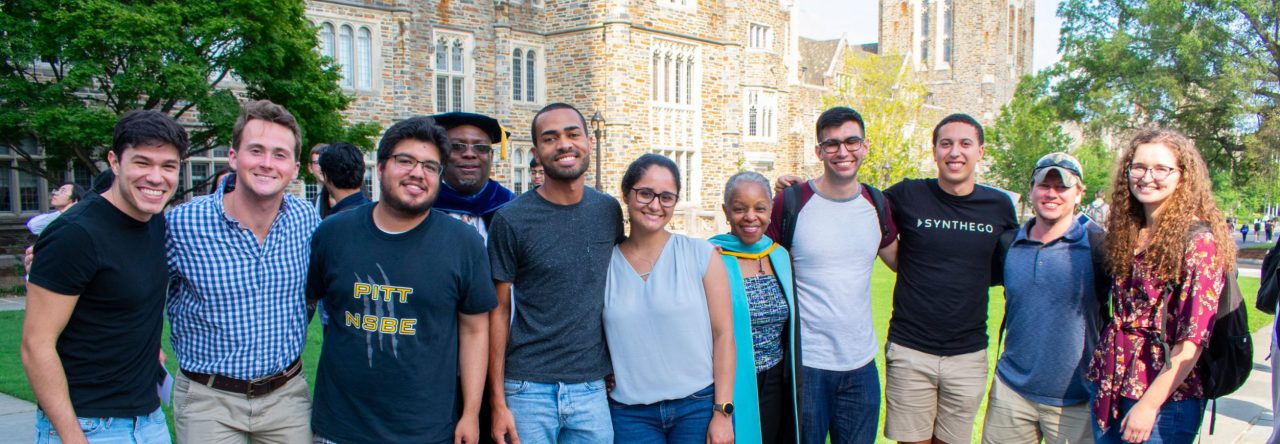
The Duke UCEM has recruited faculty champions from each of the ten UCEM-affiliated academic departments and programs. They work closely with Graduate School staff and co-PIs of the UCEM to help integrate the Sloan Scholars into the research community.
- Chemistry
- Computer Science
- Mathematics
- Physics
- Statistical Science
- Biomedical Engineering
- Civil and Environmental Engineering
- Electrical and Computer Engineering
- Mechanical Engineering and Materials Science
- University Program in Materials Science and Engineering
Chemistry
 Michael C. Fitzgerald, Ph.D.
Professor of Chemistry
michael.c.fitzgerald@duke.edu
Biosketch
Michael Fitzgerald received a B.S. degree with honors in Chemistry from Davidson College, and a Ph.D. in Analytical Chemistry from the University of Wisconsin-Madison. After graduate school he was a postdoctoral fellow and then senior research associate at the Scripps Research Institute in La Jolla, California before joining the Duke Chemistry faculty in 1998. He has also been a faculty member in the Department of Biochemistry in Duke University’s School of Medicine since 2001. While at Duke, Professor Fitzgerald has been actively involved in graduate research and mentoring activities. He has directly supervised over 30 Duke graduate students in the Departments of Chemistry and Biochemistry, he has served on Duke University’s Executive Committee of the Graduate Faculty, and he has participated in several NIH-funded graduate training programs including the Pharmacological Sciences Training program and the Center for Biomolecular and Tissue Engineering Training Program. Over the years, he has mentored a diversity of graduate students in his research program including many under-represented minorities in STEM (e.g., many women, Hispanic- and African American scientists). He is currently the Director of Graduate Studies in the Chemistry Department at Duke, a position that he has held since 2017. Professor Fitzgerald’s research interests include the development and application of protein mass spectrometry methods for the large-scale and high-throughput analysis of protein folding and ligand binding using amide hydrogen/deuterium exchange and other chemical modification strategies. These new methodologies are currently being used to characterize and diagnose disease phenotypes and study drug action.
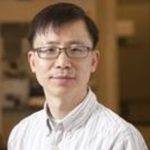 Jiyong Hong, Ph.D.
Professor of Chemistry
jiyong.hong@duke.edu
Biosketch
Jiyong Hong received a B.S. and M.S. from Seoul National University (South Korea), and a Ph.D. in Chemistry from the Scripps Research Institute where he later held a postdoctoral research associate position. While at Duke, Professor Hong was the Director of Graduate Studies of the chemistry department (2013-2017) and was the Co-director of GAANN (Graduate Assistance in Areas of National Need, US Department of Education) Fellowship Program (2015-2018). He is also a Member of Duke Cancer Institute and Duke Pharmacological Sciences Training Program funded by NIH, and was a Member of Duke NSF REU: Chemistry and Applications of Smart Molecules and Materials (CASMM). He is also faculty in the Department of Pharmacology and Cancer Biology and has served as the associate Chair of Chemistry at Duke since 2019. Hong’s research interest includes synthesis and study of mechanisms of action of natural products, identification of small molecule modulators for biological processes, and development of synthetic methods for rapid construction of molecular complexity.
Computer Science
Jeffrey S. Chase, Ph.D.
Professor of Computer Science
chase@cs.duke.edu
Biosketch
Jeffrey S. Chase is a Professor of Computer Science at Duke University in Durham, NC. His research with Duke’s Network and Internet Computing Lab deals with efficient and reliable sharing of information and resources in computer networks ranging from clusters to the global Internet. Dr. Chase is an alumnus of Dartmouth College. He received his PhD in Computer Science from the University of Washington in 1995.
Dr. Chase has published over 80 technical papers in refereed conferences and journals on topics including network storage, I/O prefetching, end-system networking, active storage, utility computing, Internet content distribution, massive-data computing, and automated management of large-scale server infrastructures. He has served on program committees for leading technical conferences in operating systems, distributed computing, file and storage technologies, and Web content delivery.
Before moving to academia, Dr. Chase spent seven years as a Senior Software Engineer at Digital Equipment Corporation, working primarily as a Unix kernel developer in the areas of file systems and networking. Among his contributions at Digital he was a principal developer of Digital’s first implementation of Sun’s Network File System (NFS), Digital’s first Unix kernel for symmetric multiprocessors, and the first version of the Polycenter hierarchical file system. Polycenter manages magnetic disks as a cache over a magneto-optical jukebox, providing the illusion of a single disk containing a massive data store.
Mathematics
Physics
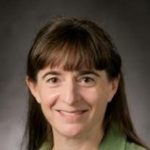 Roxanne P. Springer, Ph.D.
Professor of Physics
rps@phy.duke.edu
Biosketch
Roxanne Springer is a Professor of Physics. She obtained her undergraduate degree in Physics and Chemical Physics from Rice University, and her Ph.D. from the California Institute of Technology in Theoretical Particle Physics. She works on weak interactions (the force responsible for nuclear beta decay) and quantum chromodynamics (the force that binds quarks into hadrons and generates the mass of protons and neutrons). She is a Fellow of the American Physical Society (APS). She has served as chair of the Southeastern Section of the APS and on the Executive Committee of the Division of Nuclear Physics (DNP) of the APS. She created and was the first chair of the DNP Diversity, Equity, and Inclusion committee, under which the DNP Allies program operates. DNP Allies are trained and vetted members of our community who attend every DNP professional meeting as a resource and to address concerns in real time. She also created the session chair training module that teaches session chairs how to recognize problematic interactions and intervene in the moment. Her efforts were recognized in 2023 by the APS Division of Nuclear Physics Distinguished Service Award and the APS Southeastern Section Francis G. Slack Award. She has participated in reviews of US physics departments and laboratories to help them create a culture of inclusion (sponsored by the APS Committee on the Society of Women in Physics and the APS Committee on Minorities). She has served as the faculty sponsor of Duke’s Bouchet Society (which advocates for underrepresented graduate students in the sciences) and organized recruitment visits of HBCU science undergraduates to Duke. She is currently a co-chair of the Advisory Committee for the Sloan Foundation’s Duke University Center for Exemplary Mentoring.
Statistical Science
 Merlise Clyde, Ph.D.
Professor of Statistical Science
clyde@duke.edu
Biosketch
Merlise Clyde is a professor of statistical science at Duke University and has served as chair of the Department of Statistical Science at Duke since 2013. She received her Ph.D. in 1993 from the University of Minnesota and joined the faculty at the Institute of Statistics and Decision Sciences (now the Department of Statistical Sciences) at Duke University in the fall of 1993. She is a past president of the International Society of Bayesian Analysis (ISBA), and an elected Fellow of ISBA and the American Statistical Association. She received the Zellner Medal from ISBA in 2016. Her research focuses on Bayesian solutions to the related problems of feature/variable selection, model selection and prediction using an ensemble of models to account for model uncertainty using Bayesian Model Averaging, with an emphasis on prior choice and computation.
 Jerry Reiter, Ph.D.
Professor of Statistical Science
jerry@stat.duke.edu
Biosketch
Jerry Reiter graduated from Duke with a B.S. in mathematics in 1992. After working for two years as an actuary, he earned his Ph.D. in statistics from Harvard University in 1999. He landed back at Duke in the Department of Statistical Science in fall 2002. Between 2010 and 2015, he was the Mrs. Alexander Hehmeyer Professor of Statistical Science, having been appointed as a Bass Chair in recognition of “excellence in undergraduate teaching and research.” He was the recipient of the Alumni Distinguished Undergraduate Teaching Award for 2007. This annual award is given by Duke undergraduates to a member of the Duke faculty. He was also the recipient of the Outstanding Postdoc Mentor award for 2016. Dr. Reiter has supervised 16 Ph.D. dissertations and 15 master’s theses in statistical science. He participates in both applied and methodological research in statistical science and is most interested in applications involving social science and public policy. His methodological research focuses mainly on statistical methods for protecting data confidentiality, for handling missing data, and for modeling complex data, including methods for causal inferences.
Biomedical Engineering
David F. Katz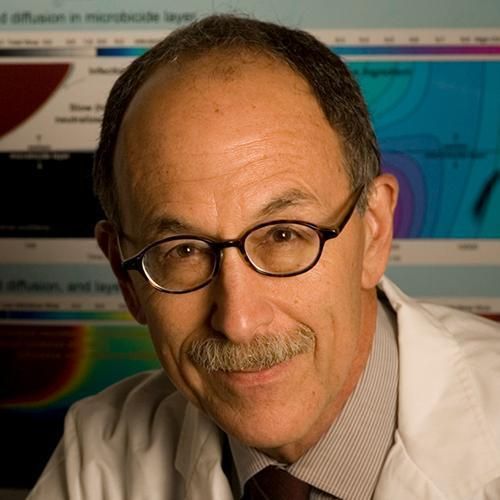
Nello L. Teer, Jr. Distinguished Professor of Biomedical Engineering
dkatz@duke.edu
Biosketch
Dr. Katz’s research interests emphasize methods for prophylaxis against STD’s, including topical microbicides, and for contraception. Core perspectives and approaches include mass transport phenomena and biofluid mechanics; rheology and imaging, both in vitro and in vivo. These are integrated to fundamental biological, pathological, and clinical processes and needs for improvement.
Kathy Nightingale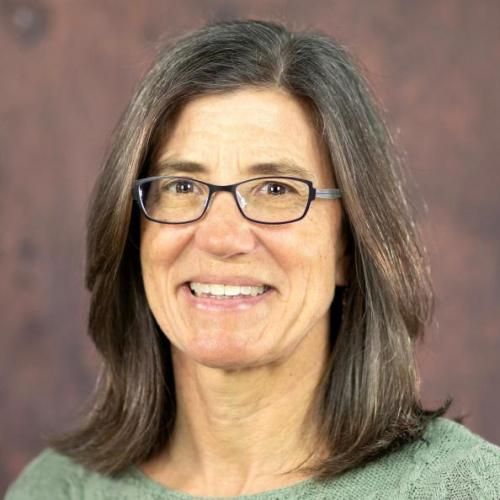
Director of Graduate Studies, Theo Pilkington Distinguished Professor of Biomedical Engineering
kathy.nightingale@duke.edu
Biosketch
The goals of our laboratory are to investigate and improve ultrasonic imaging methods for clinically-relevant problems. We do this through theoretical, experimental, and simulation methods. The main focus of our recent work is the development of novel, acoustic radiation force impulse (ARFI)-based elasticity imaging methods to generate images of the mechanical properties of tissue, involving interdisciplinary research in ultrasonics and tissue biomechanics. We have access to the engineering interfaces of several commercial ultrasound systems which allows us to design, rapidly prototype, and experimentally demonstrate custom sequences to explore novel beamforming and imaging concepts. We employ FEM modeling methods to simulate the behavior of tissues during mechanical excitation, and we have integrated these tools with ultrasonic imaging modeling tools to simulate the ARFI imaging process. We maintain strong collaborations with the Duke University Medical Center where we work to translate our technologies to clinical practice. The ARFI imaging technologies we have developed have served as the basis for commercial imaging technologies that are now being used in clinics throughout the world. We are also studying the risks and benefits of increasing acoustic output energy for specific clinical imaging scenarios, with the goal of improving ultrasonic image quality in the difficult-to-image patient.
George Truskey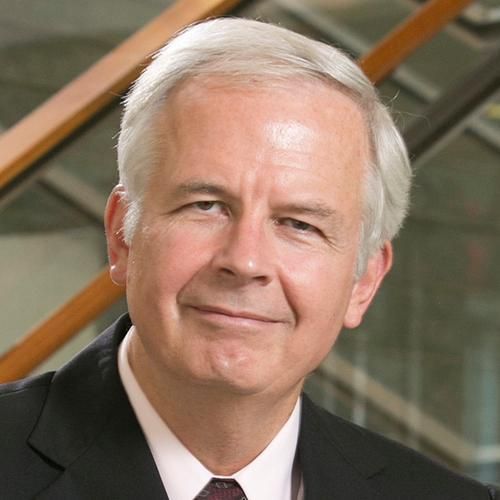
Associate Chair for Education, R. Eugene and Susie E. Goodson Distinguished Professor of Biomedical Engineering
george.truskey@duke.edu
joel.collier@duke.edu
Biosketch
My research interests focus upon the effect of physical forces on the function of vascular cells and skeletal muscle, cell adhesion, and the design of engineered tissues. Current research projects examine the effect of endothelial cell senescence upon permeability to macromolecules and the response to fluid shear stress, the development of microphysiological blood vessels and muscles for evaluation of drug toxicity and the design of engineered endothelialized blood vessels and skeletal muscle bundles.
Civil and Environmental Engineering
 Fred K. Boadu, Ph.D.
Associate Professor of Civil and Environmental Engineering
boadu@duke.edu
Biosketch
Fred Boadu received his B.S. (Hons) in Geological Engineering from the Kwame Nkrumah University of Science and Technology, Ghana, a Post-Graduate Diploma in Applied Geophysics from McGill University, and his Ph.D. in Environmental and Engineering Geophysics from Georgia Institute of Technology in 1994. Dr. Boadu’s research focuses on the areas of exploration, engineering and environmental geophysics. Current research involves characterizing the transport and storage properties of porous media such as fractured rocks, soils and human tissue. The work involves modeling, laboratory, and field experiments. Recently, his research has involved the use and mismanagement of used motor oil by auto-mechanics in Ghana and impact on their Health and the Environment. Dr. Boadu has run several Bass Connections and Duke Engage programs addressing occupational health and environmental challenges in Africa, Ghana. In addition, Dr. Boadu has been involved in research regarding nitrate contamination in groundwater and implications on the health of babies in Ghana. Addressing these challenges have involved research, education and awareness creation programs. He has served as a mentor for several minority students in Pratt School of Engineering.
Electrical and Computer Engineering
 Hai (Helen) Li, Ph.D.
Marie Foote Reel E’46 Distinguished Professor of Electrical and Computer Engineering
hai.li@duke.edu
Biosketch
In addition to her faculty appointments, Helen Li is the Chair of the Electrical and Computer Engineering Department and Co-director of NSF IUCRC for Alternative Sustainable and Intelligent Computing (ASIC). She received her B.S. and M.S. degrees from Tsinghua University, both with early graduation, and a Ph.D. from Purdue University in 2004. Earlier in her career, she was with Qualcomm, Inc., Intel Corporation, Seagate Technology, the Polytechnic Institute of New York University, and the University of Pittsburgh. Her research interests include neuromorphic computing systems, machine learning acceleration and trustworthy AI, emerging memory technologies, circuit and architecture, and low power circuits and systems. She has authored or co-authored more than 250 technical papers in peer-reviewed journals and conferences and a book entitled Nonvolatile Memory Design: Magnetic, Resistive, and Phase Changing (CRC Press, 2011). She was a Distinguished Lecturer of the IEEE CAS society (2018–2019) and is a distinguished speaker of ACM (2017–2020). Dr. Li is a recipient of the NSF Career Award, DARPA Young Faculty Award (YFA), TUM-IAS Hans Fischer Fellowship from Germany, and ELATE Fellowship. Dr. Li is a fellow of ACM and IEEE.
Mechanical Engineering and Materials Science
 Sophia Santillan
Associate Professor of the Practice, Mechanical Engineering and Materials Science
sophia.santillan@duke.edu
Biosketch
Sophia Santillan is an Associate Professor of the Practice. As a STEM teacher and professor, she is interested in the effect of emerging technology and research on student learning and classroom practice. In addition to teaching several required courses for undergraduates, Santillan co-leads an interdisciplinary project focused on the gender gap in STEM.
 Stefan Zauscher, Ph.D.
Sternberg Family Professor of Mechanical Engineering and Materials Science
zauscher@duke.edu
Biosketch
In addition to his faculty appointment, Stefan Zauscher is the Director of the Research Triangle Materials Science and Engineering Center (RT-MRSEC). He received his Ph.D. in Materials Science from the University of Wisconsin-Madison in 2000. He is an expert in (bio)surface and interface science, where a large portion of his research is focused on fabrication and characterization of surface-confined biomolecular and polymeric micro- and nanostructures and the necessary methodologies to manipulate these structures at the nanoscale. He has authored more than 150 scientific papers, proceedings, and book chapters. He is the recipient of an NSF Faculty Early Career Development Award, the ICCES Outstanding Young Investigator Award, the 2012 Capers and Marion McDonald Award for Excellence in Teaching and Research. Dr. Zauscher is a Fellow of the Bass Society at Duke University. In 2016, he received the Dean of the Graduate School Award for Inclusive Excellence in Graduate Education.
University Program in Materials Science and Engineering
Patrick Charbonneau, Ph.D.
Professor of Physics
patrick.charbonneau@duke.edu
Biosketch
Patrick Charbonneau is Professor of Physics at Duke University. His research in soft matter and statistical physics uses theory and computer simulations to study glassy materials and frustrated systems. He also contributes to the history of science, curating projects on quantum and statistical physics as well as food history.
